Plastic film die-cutting
Plastic film die-cutting yields precise contours for flexible to semi-rigid materials – also in conjunction with self-adhesive outfitting. Krückemeyer manufactures tailor-made solutions, including optimized ejection aids.
Kunststofffolien stanzen individuell
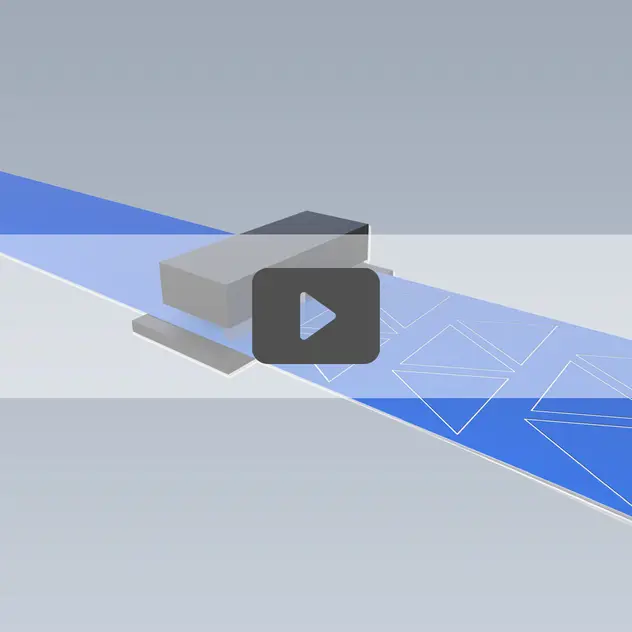
| Technique | Punching using a strip steel cutting tool |
| Working width | up to 600 mm |
| Thickness | up to 10 mm |
| Tolerances | ±0.5 mm |
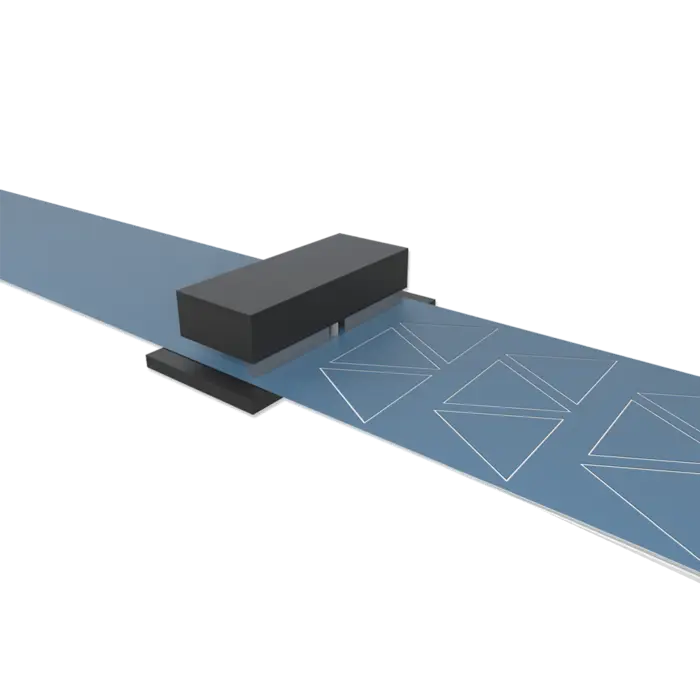
We punch plastic films in flat-bed or stroke operation with a strip steel cutting tool in a defined cycle. This enables virtually any 2D contour to be produced flexibly and individually.
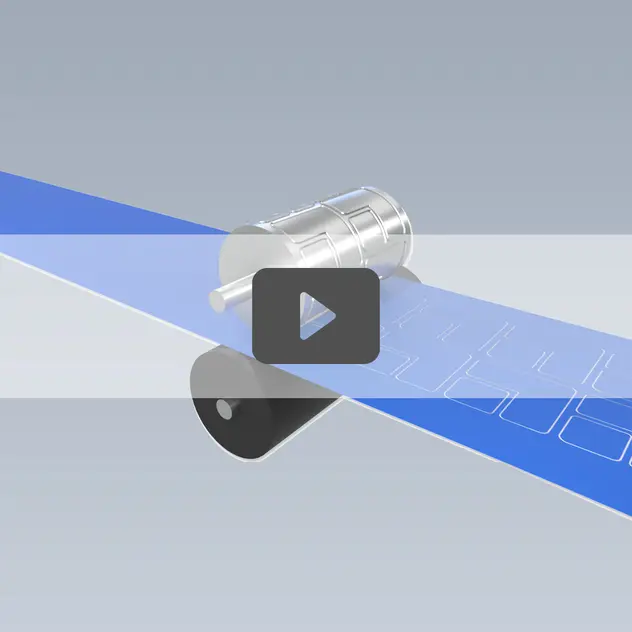
| Technique | Continuous punching using a punch-cylinder tool |
| Working width | up to 250 mm |
| Thickness | up to 2 mm |
| Tolerances | ±0.5 mm |
In traditional rotary punching, plastic films are processed in a continuous feed using a punching cylinder and tooling. This enables large production runs to be produced quickly, cost-effectively, and with consistently precise quality.
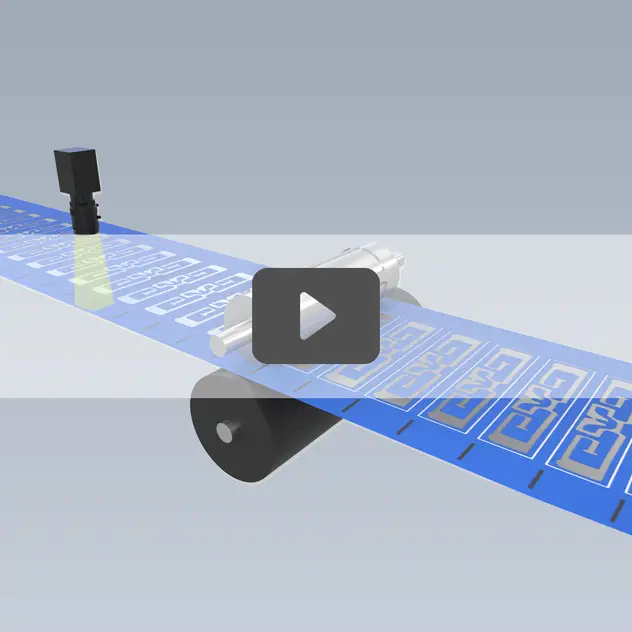
| Technology | register- and point-accurate punching with camera technology |
| Working width | up to 600 mm |
| Tolerances | ±0.2 mm |
Servo rotary punching enables point- and register-accurate punching of plastic films using a camera system. For self-adhesive films, for example, with integrated electronic components, punching is performed only at precisely defined locations so that all functional areas remain fully intact.
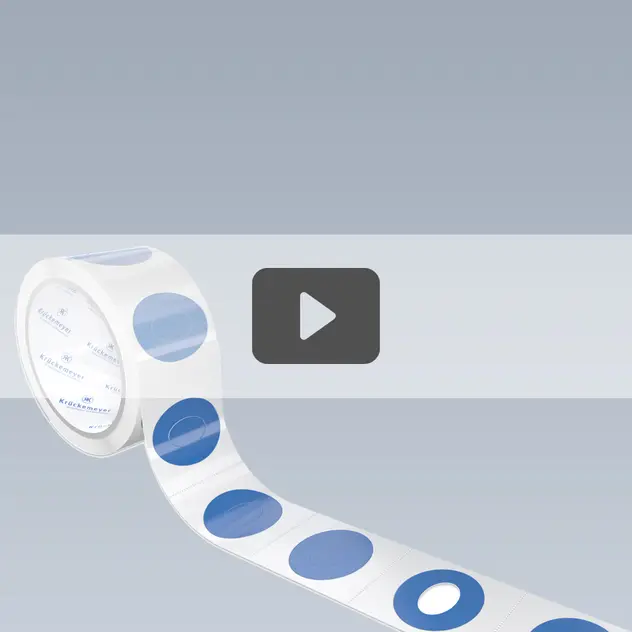
| Technique | Material removal – layer by layer |
| Feature I | Different shapes of various layers |
| Feature II | Internal cutouts, individually customizable |
| Feature III | Punching without damaging the backing |
During kiss-cutting of plastic film, we cut into the carrier material without cutting through the backing. Also multi-layer films or laminate constructions can be targeted – each layer separately, with a clearly defined cutting depth.
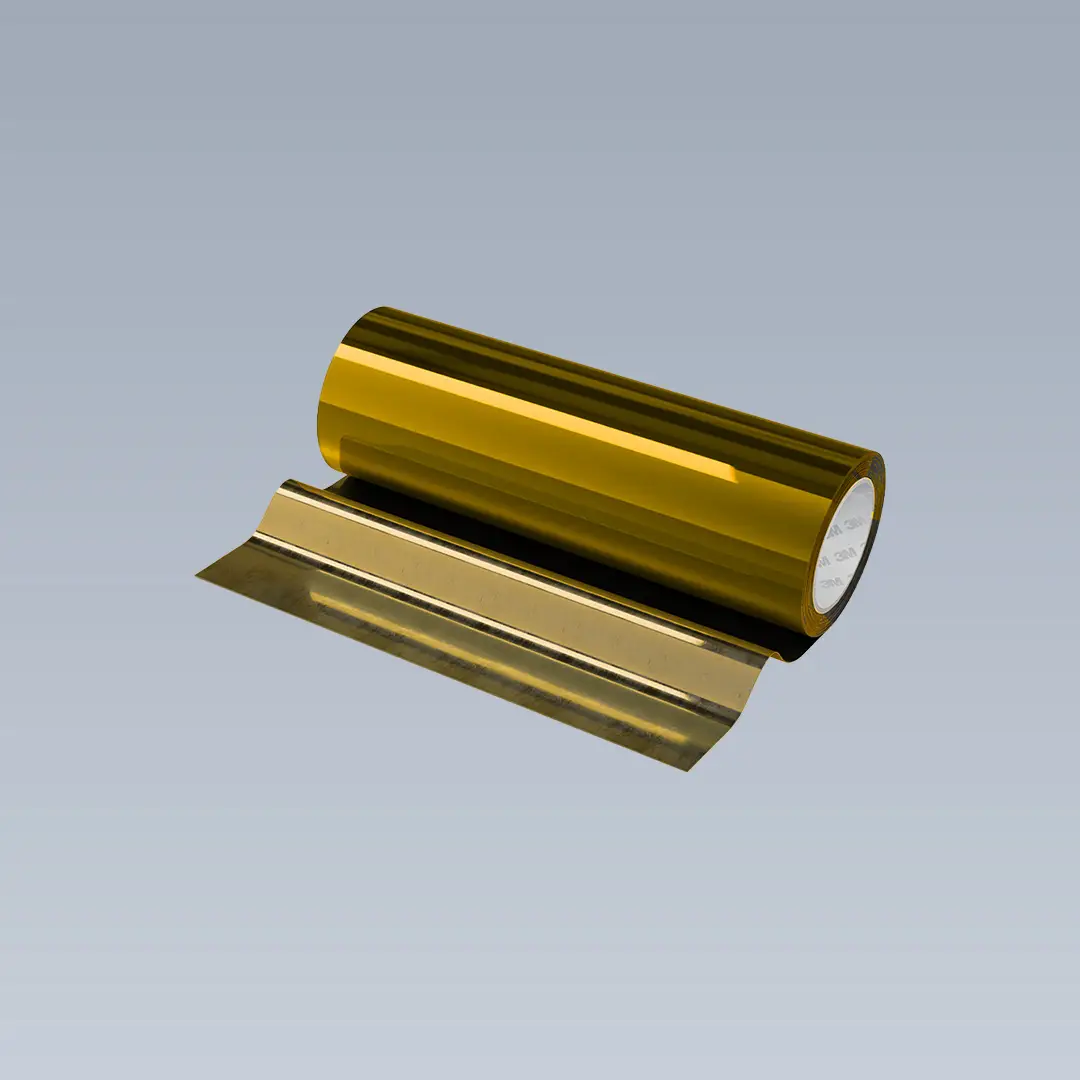
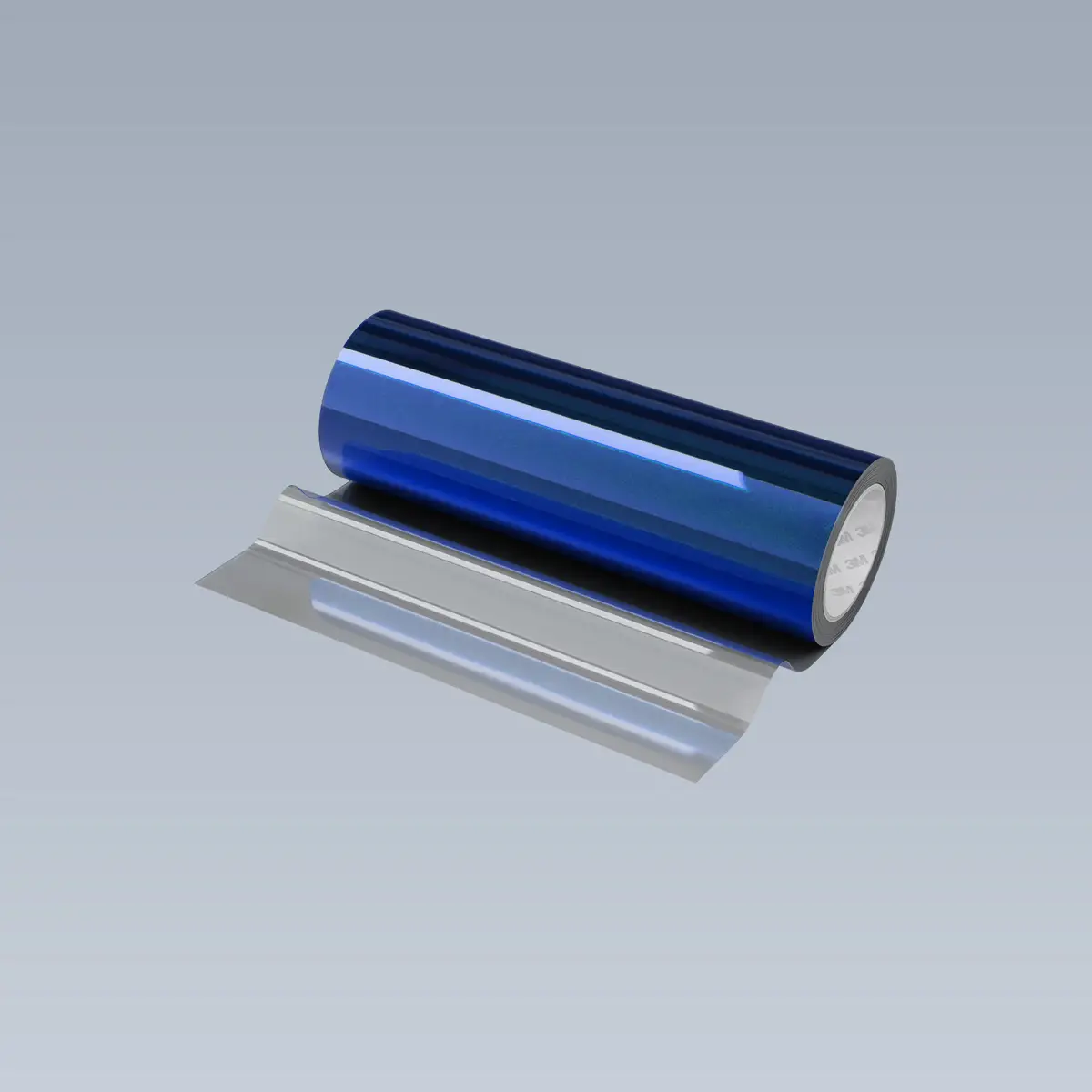
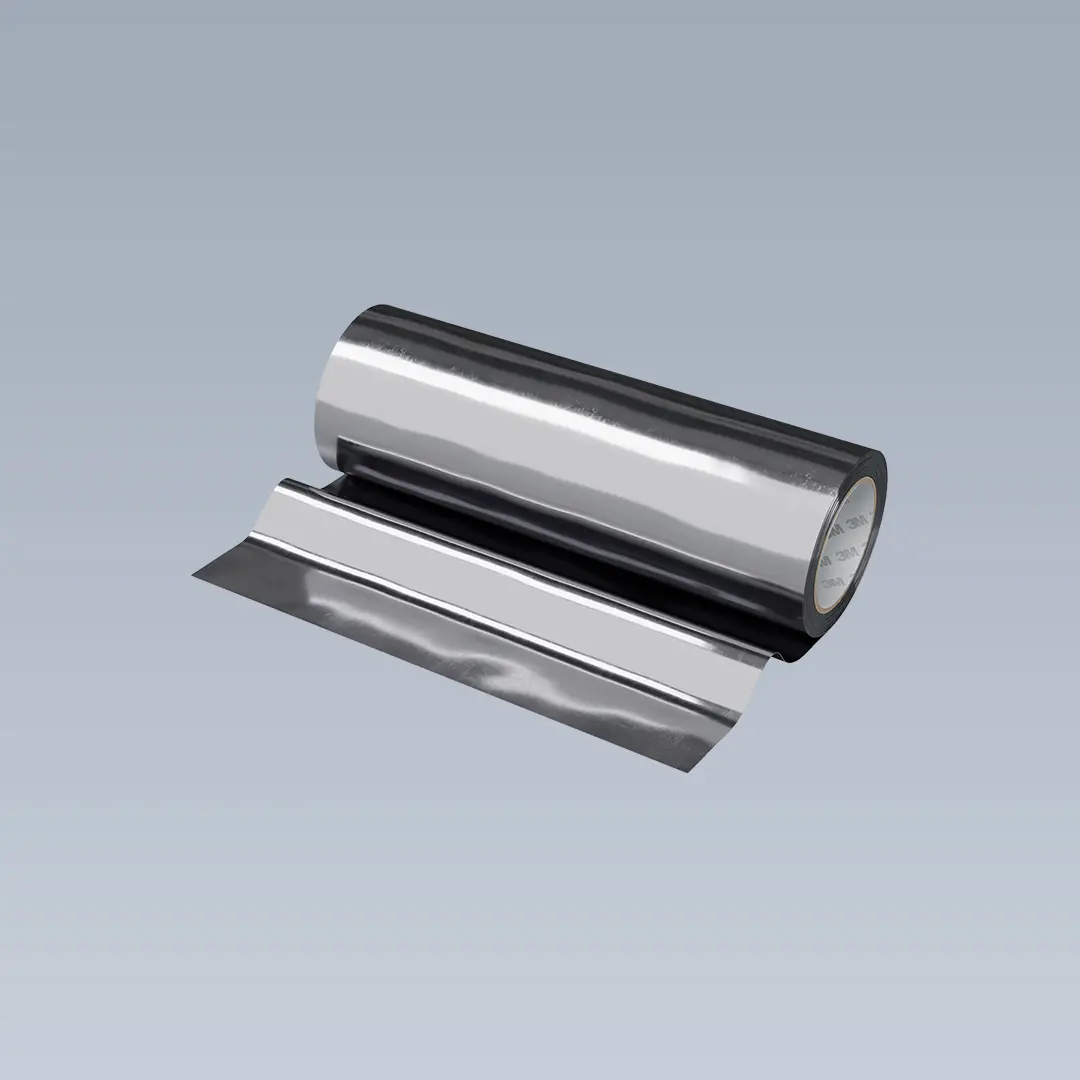

| Technical Films | Electronics | Thermal | and more. |
| Protection Films | Surface protection | Product protection |
| Metal Foils | Aluminium | Copper | Deposition coatings |
| Plastic Films | PE | PP | PTFE | PI | PVC | and more. |
| Self-adhesive Materials | Films equipped with self-adhesive |
| Non-adhesive | Films without adhesive layer |
Single- and double-sided, as well as non-adhesive films can be processed as die-cut parts precisely to your component. Generally, die-cutting is possible for all film materials—as long as the material can be cleanly cut and reliably wound.
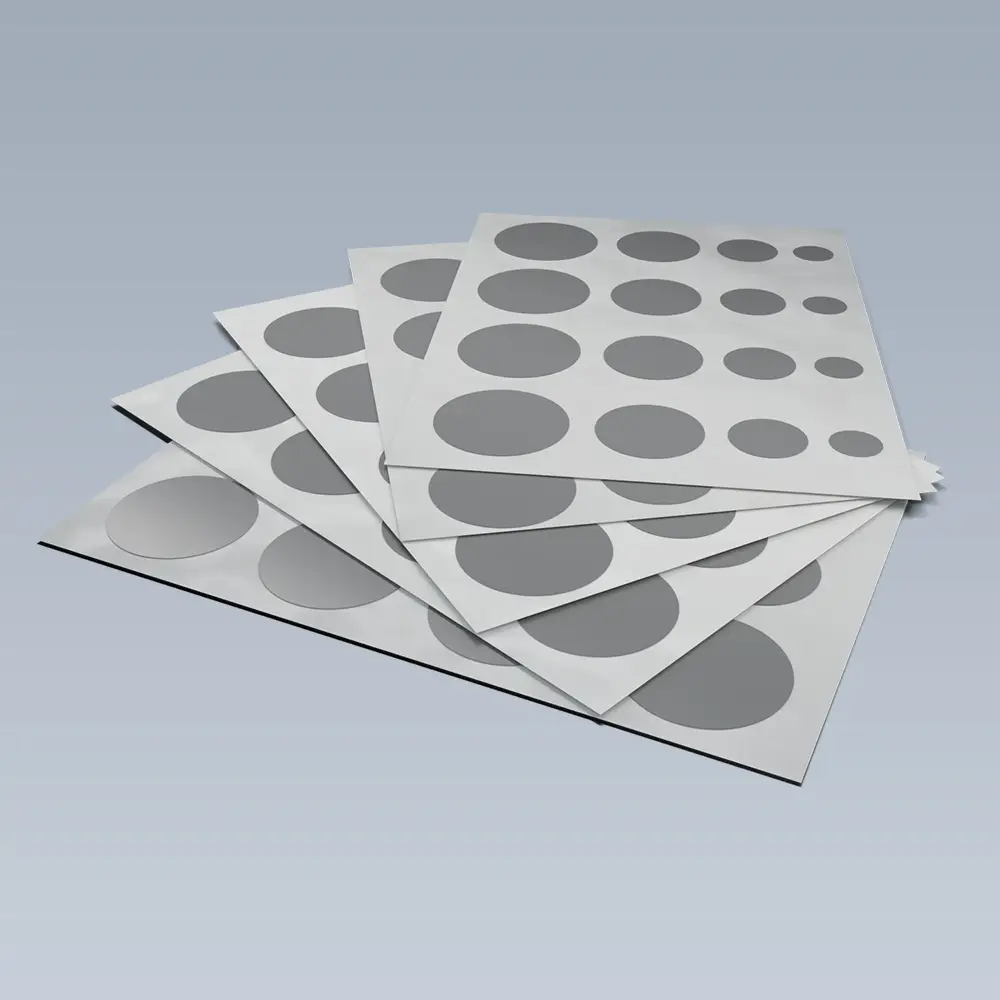
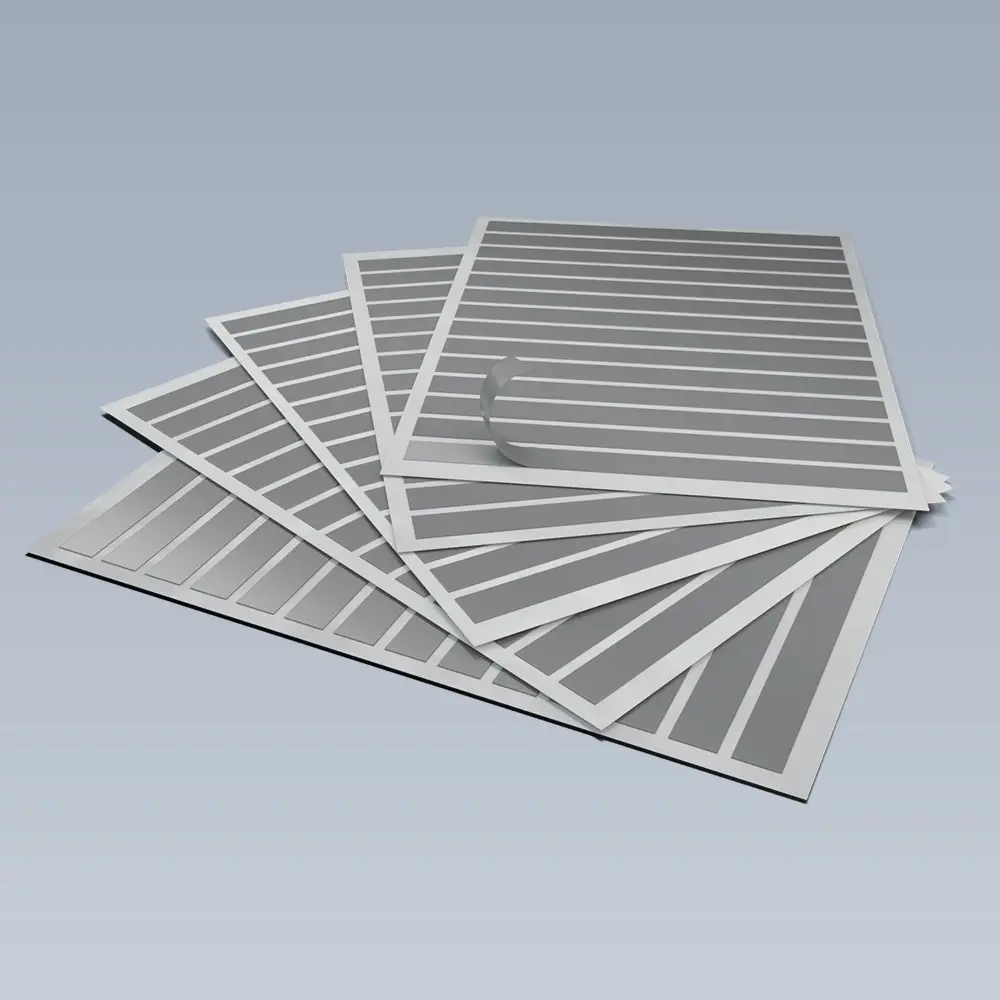
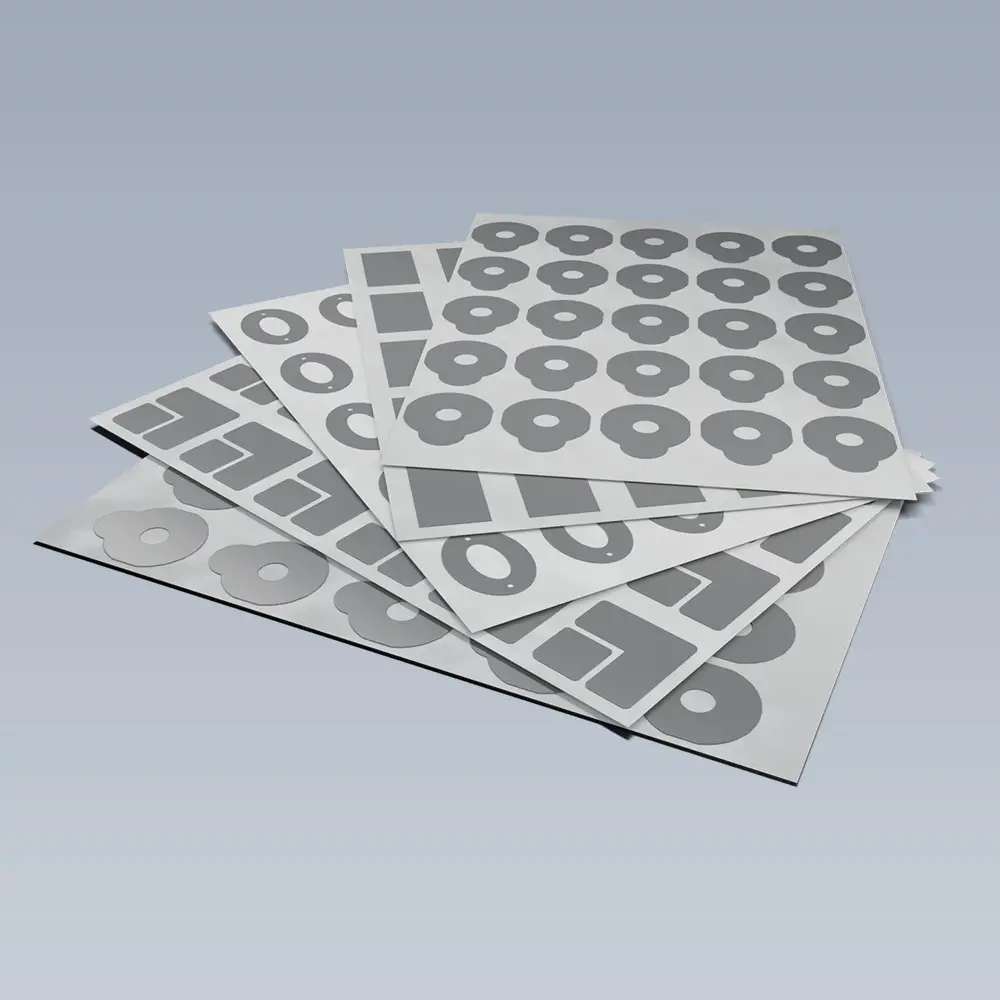
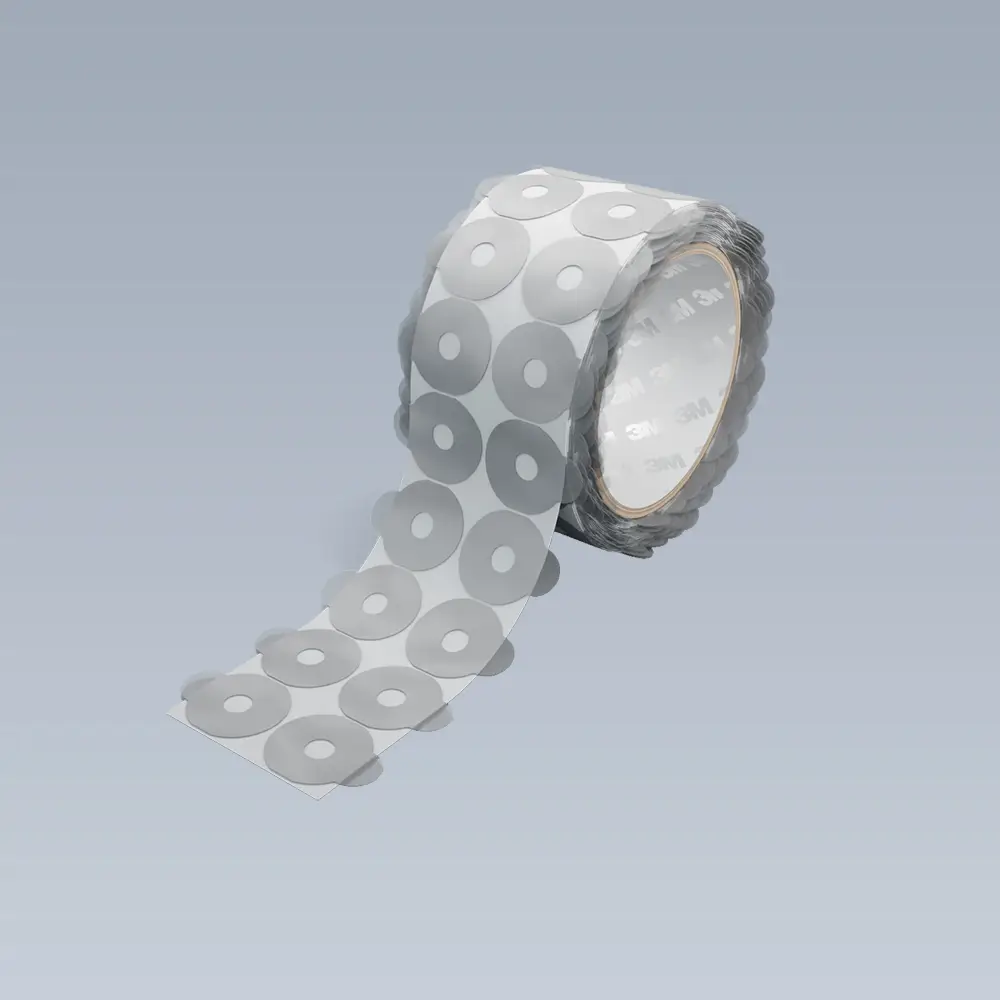
| Adhesive dots | Custom diameters |
| Adhesive tapes | Custom dimensions |
| Custom die-cut adhesive parts | All 2D shapes |
| Adhesive pads & sheets | Custom dimensions |
| Carrier materials | Roll stock & sheet stock | individual parts |
We usually punch your parts on a silicone-based carrier material. This allows you to receive them either as roll stock, on sheets, or as individual parts – suitable for your further processing.
Häufige Fragen zum Kunststofffolien stanzen
With punching of plastic films, all types of films are brought into contour-accurate geometries — precisely tailored to the part, function, and assembly process.
The process is particularly suitable when:
- precise fits are required
- insulation, protection, or spacing functions are to be integrated
- view windows, cutouts, or openings are required
- manual trimming should be replaced by reliable, production-grade, serial solutions
Punched plastic films enable reproducible quality and efficient downstream processing.
Nearly all commonly used technical plastic films are processed, including:
- PET films
- PP, PE, or PVC films
- transparent or opaque functional films
- insulation and spacer films
- self-adhesive-coated plastic films
- multilayer and composite laminates
In addition, laminations, bonding, or outfitting with single- or double-sided adhesive coatings are possible.
The achievable precision depends on the material type, properties, thickness, and construction.<\/p>
Through modern stamping technology as well as optical quality control, tight tolerances and high repeatability are possible – even with delicate inner contours or complex geometries.<\/p>
Depending on the application, different configurations are available:
- Loose parts
- On rolls (for automated processes)
- On sheets
- With finger lift (release aid)
- With positioning or fixing aids
- With modified protective cover (paper or film liner)
- As a multilayer, ready-to-install composite solution
The configuration is tailored precisely to your assembly or laminating process.
The cost-effectiveness is determined, among other things, by:
- Film type and material thickness
- Complexity of the die-cut contour
- Tooling costs
- Quantity
- Additional processes such as lamination, coating, or adhesive changeover
- Packaging and delivery requirements
Modular manufacturing processes enable both prototypes and production runs to be economically realized.
For a precise calculation, the following are helpful:
- Technical drawing or die-cut contour
- Material specification or functional requirements
- Film thickness
- Self-adhesive or non-self-adhesive
- Preferred delivery format
- Project or annual quantity
- Information on the application process
The more detailed the information, the faster an optimal solution can be developed.
Samples and pilot runs can be produced quickly.
Thanks to flexible stamping and converting processes, test parts can be realized rapidly – ideal for development phases, validations, or production ramp-ups.

Ihr Ansprechpartner
Thomas Klein
- Expert in custom adhesive solutions
- Project business 'Adhesive Technology'
- Over 20 years in the industry