Foam die-cutting
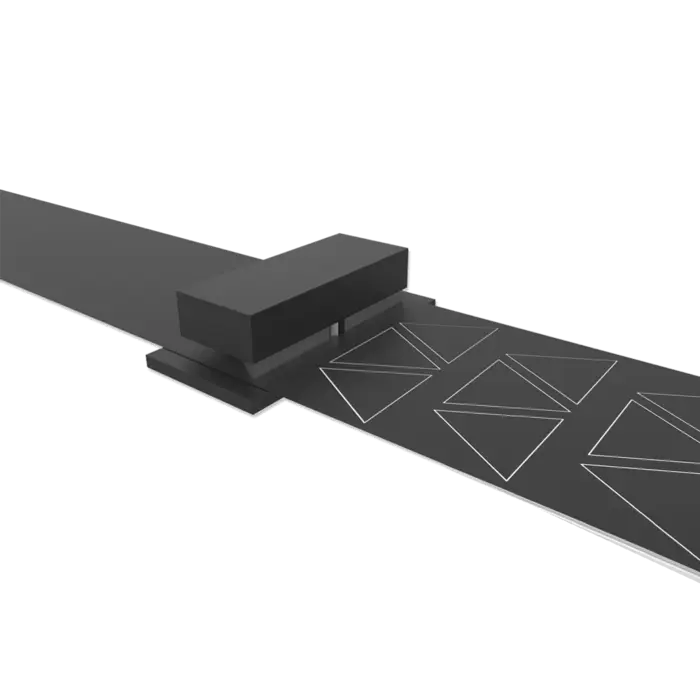
Foam punching enables the production of custom-shaped seals, insulators, or spacers – ideal for technical applications with complex geometries. Krückemeyer fabricates foam stampings to exact specifications and optimizes the process to meet your requirements.
Schaumstoff stanzen individuell
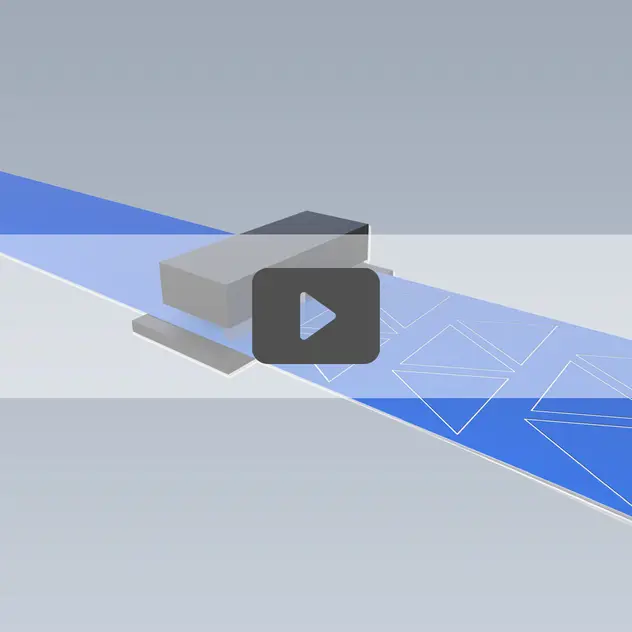
| Technique | Punching using a band-steel cutting tool |
| Working width | up to 600 mm |
| Thickness | up to 10 mm |
| Tolerances | ±0.5 mm |
In flat-bed punching, foam materials up to 10 mm thick are punched into virtually any 2D shape in a single stroke—including internal cutouts. This yields precise contours, tailored to your application.
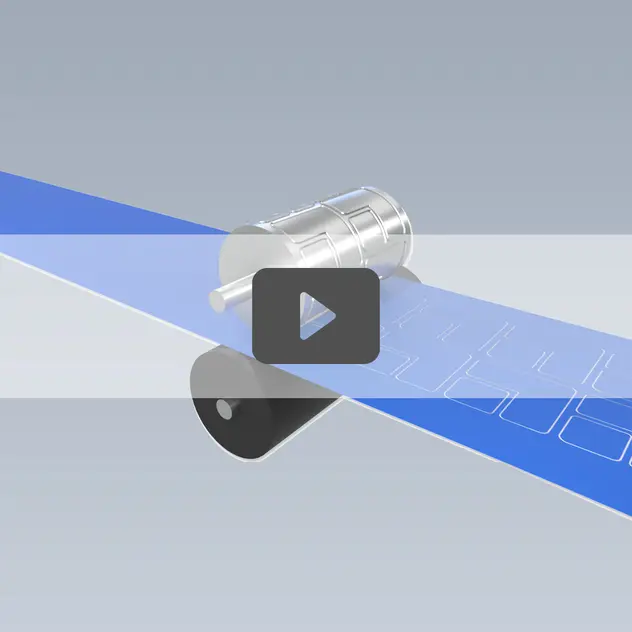
Technique<\/strong><\/td>| Continuous punching using a punch-cylinder tool<\/td><\/tr> | Working width<\/strong><\/td> | up to 250 mm<\/td><\/tr> | Thickness<\/strong><\/td> | up to 2 mm<\/td><\/tr> | Tolerances<\/strong><\/td> | |
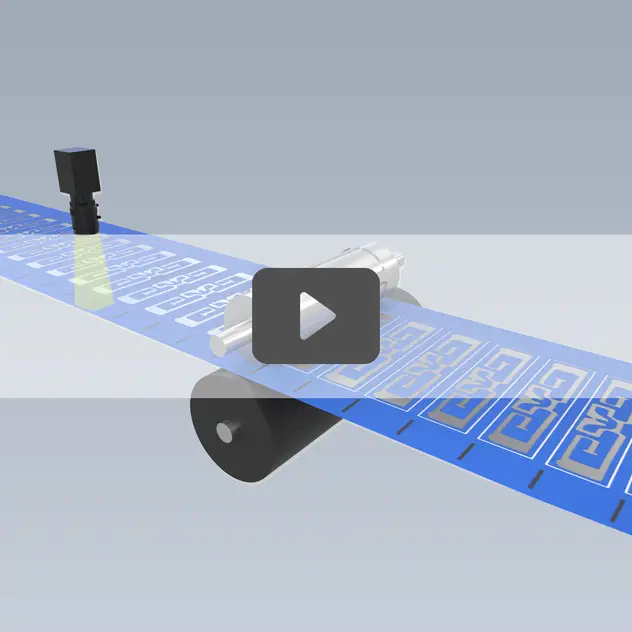
| Technique | Register- and position-accurate stamping with camera technology |
| Working width | up to 600 mm |
| Tolerances | ±0.2 mm |
If foams are to be stamped at defined locations — also as a composite with other materials — in custom shapes, we implement this precisely as well.
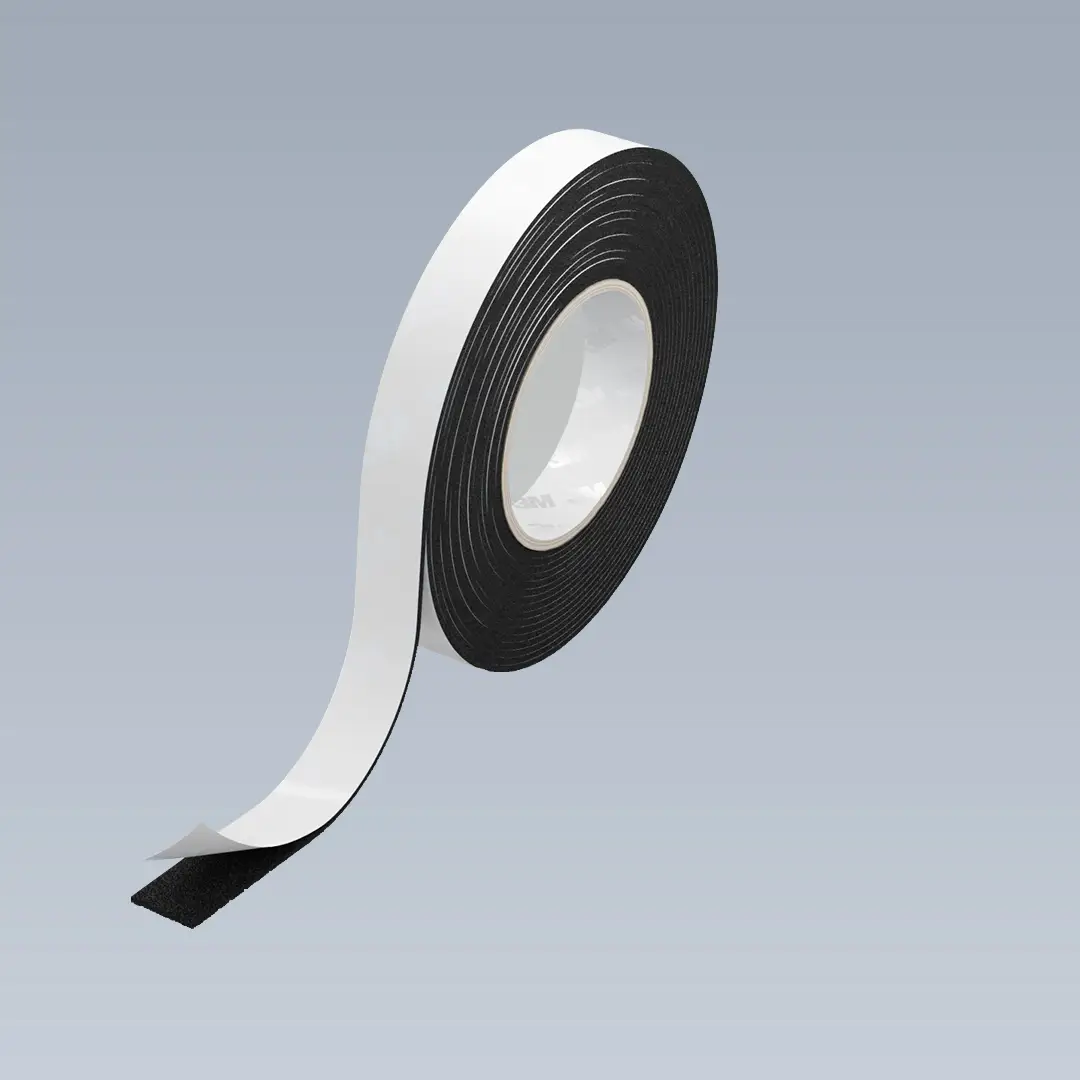
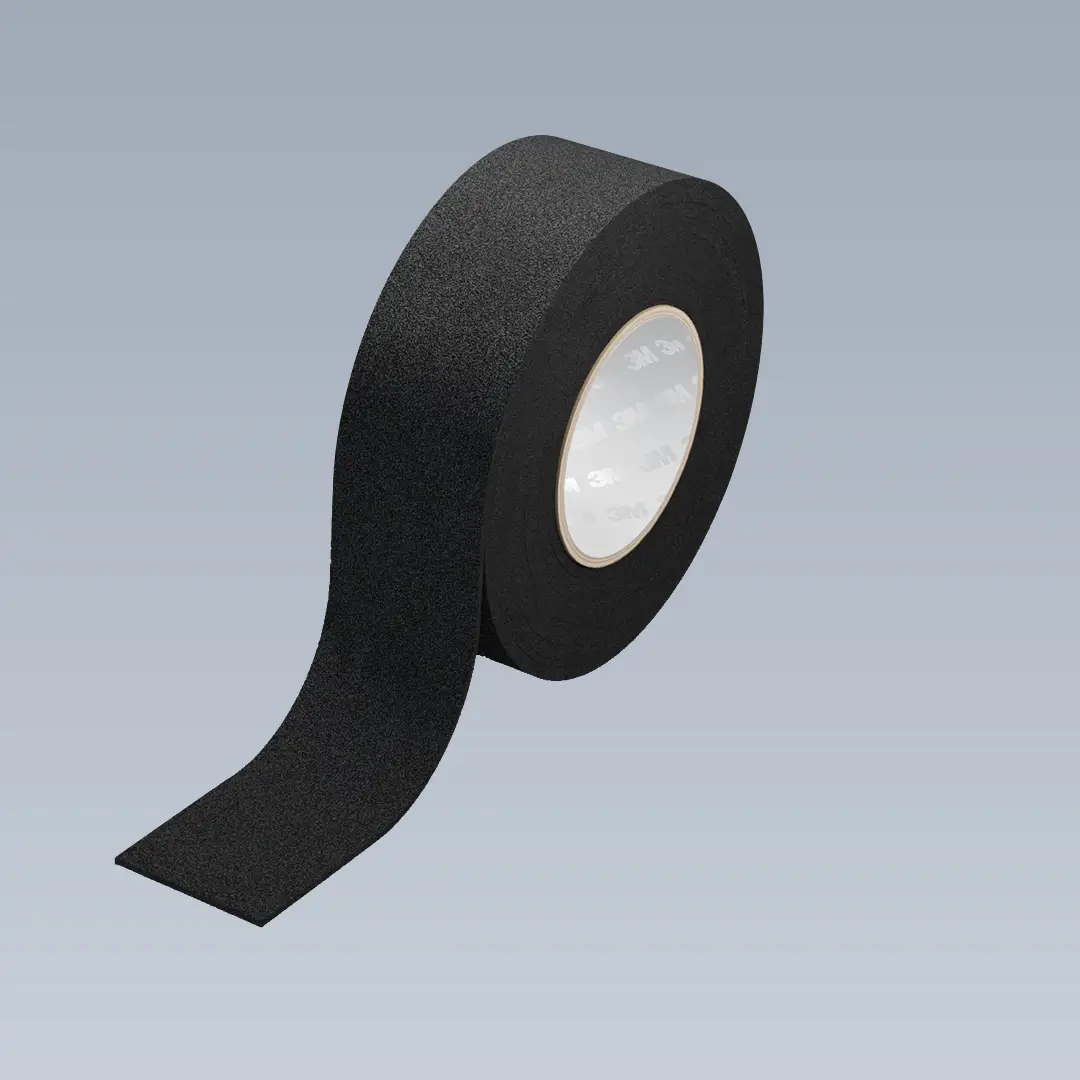
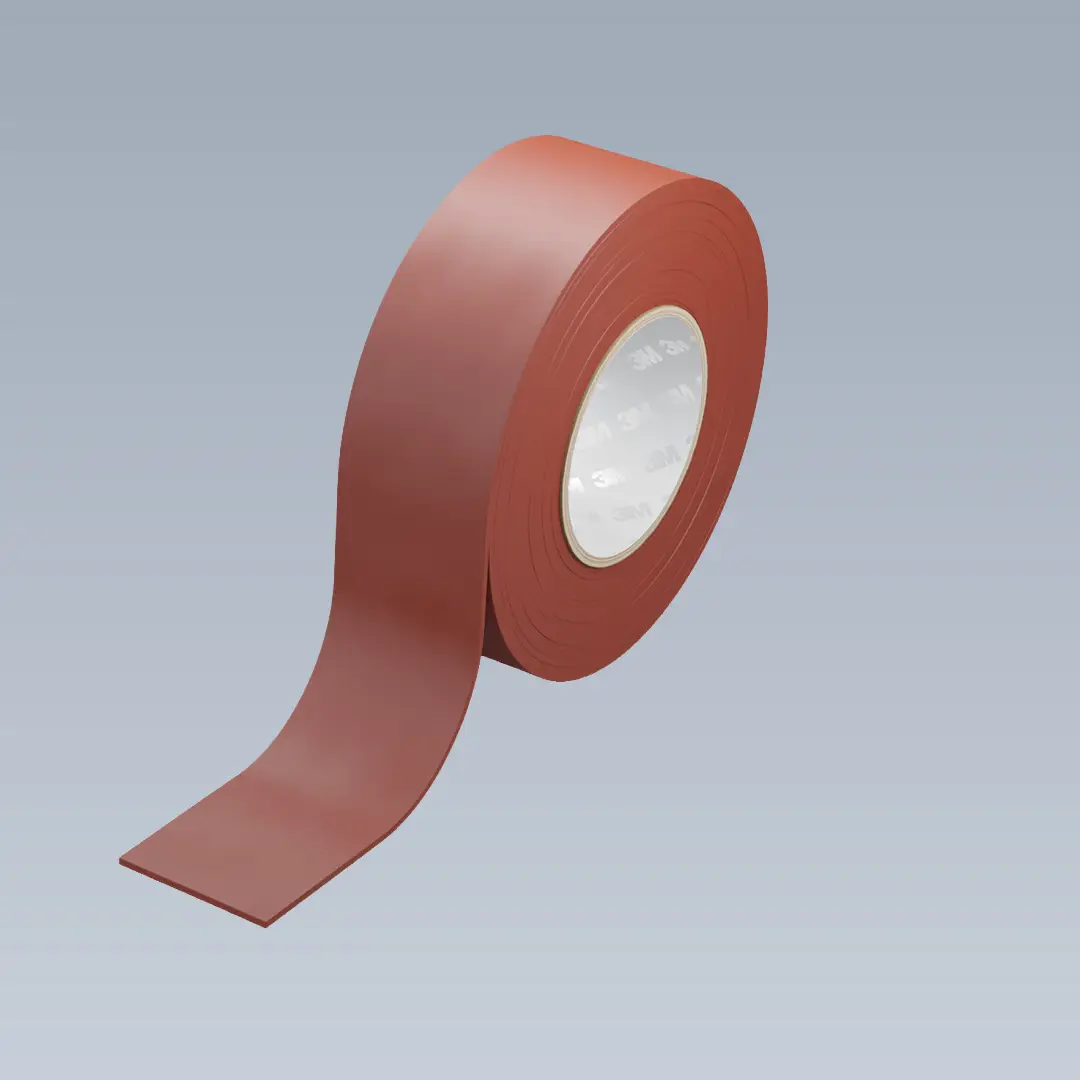
Foams<\/strong><\/td>| PE | PU | EPDM<\/td><\/tr> | Cellular rubber<\/strong><\/td> | EPDM<\/td><\/tr> | Adhesive tape<\/strong><\/td> | |
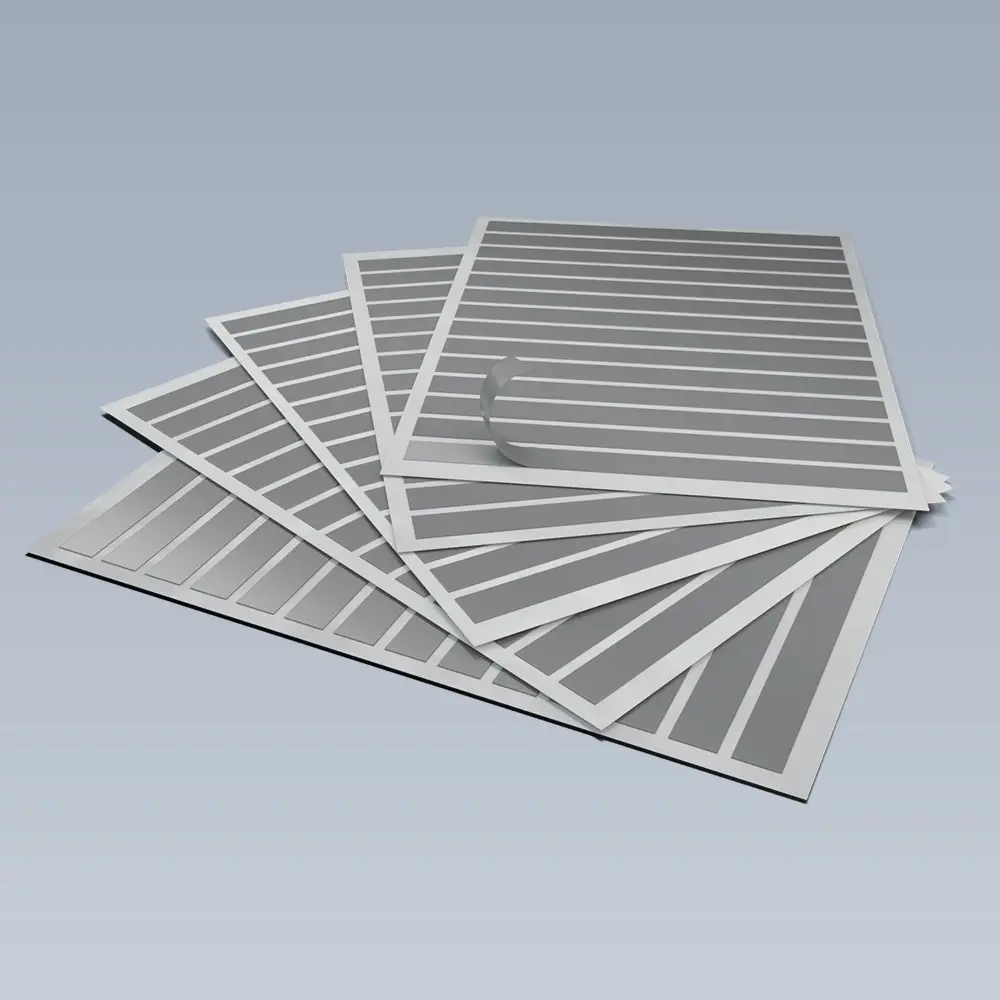
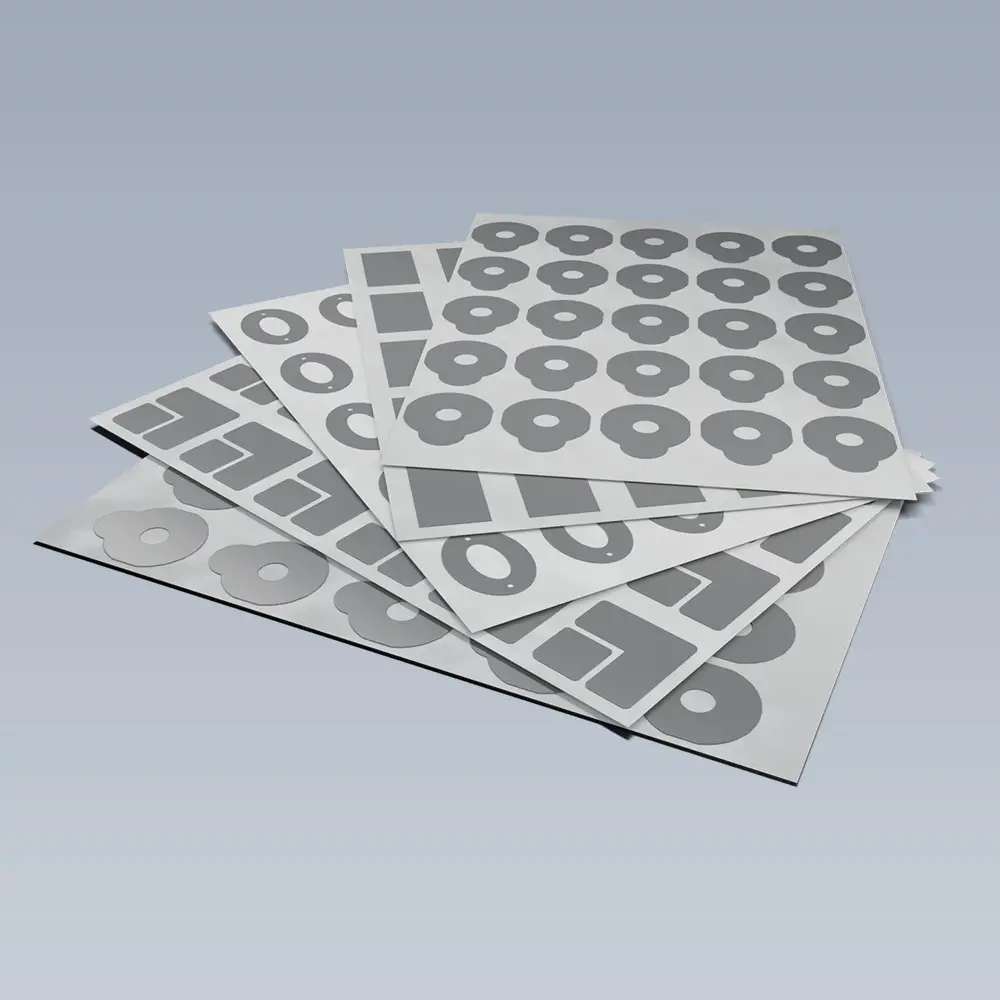
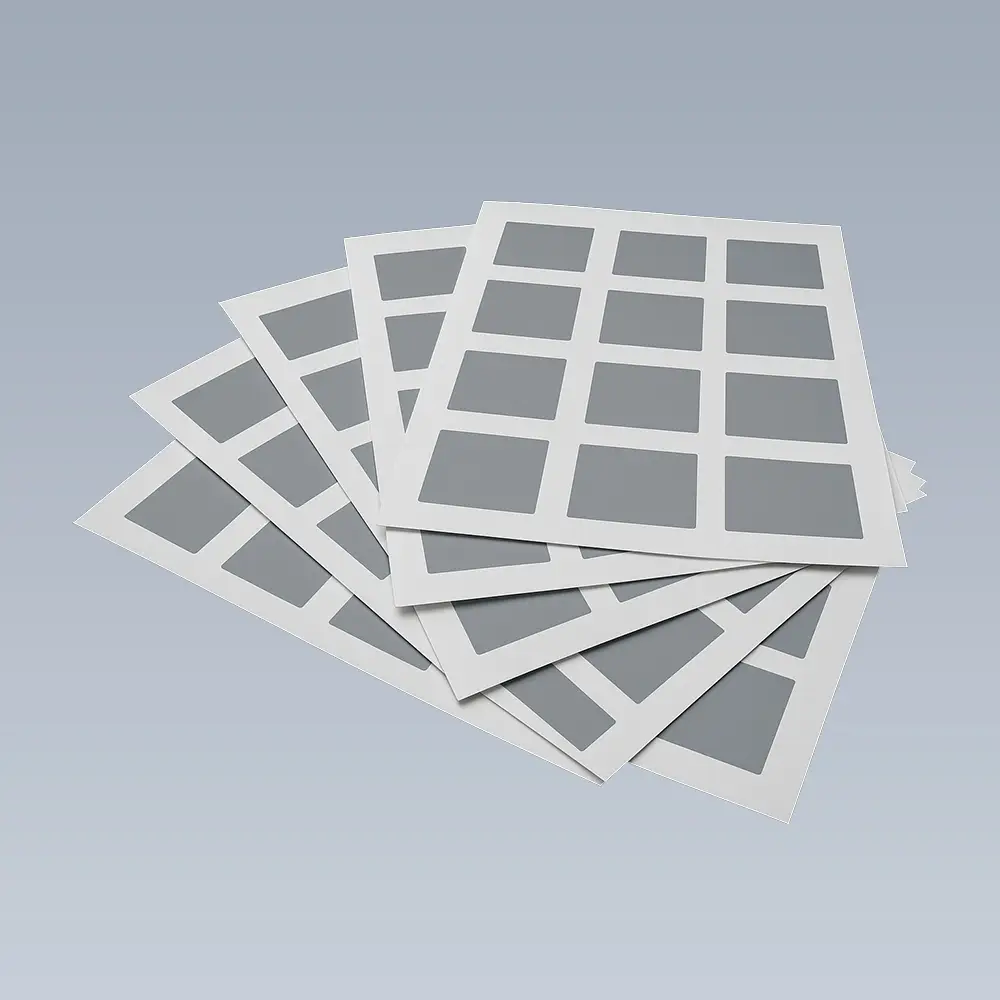

| Adhesive dots | Custom diameters |
| Adhesive tapes | Custom dimensions |
| Custom adhesive stampings | All 2D shapes |
| Adhesive pads & sheets | Custom dimensions |
| Carrier media | Rolls & sheets | individual parts |
The finished die-cut foams are supplied ready for processing as rolls or sheets – in the dimensions you require.
Häufige Fragen zum Schaumstoff stanzen
During foam punching, flexible or rigid foams are brought precisely into defined contours – well-suited for seals, spacers, cushions, or damping elements.
The process is particularly suitable when:
- custom geometries are required
- part tolerances need to be accommodated
- vibration- or shock-damping properties are required
- self-adhesive equipment should be integrated
- assembly processes should be simplified or automated
Punched foam parts provide clean, fast, and repeatable processing.
A wide range of foam qualities can be processed, for example:
- PE foams
- PU foams
- Cellular rubber
- Closed-cell and open-cell materials
- Self-adhesive backed foams
- Multi-layer or composite materials
Through lamination, coating, or changing the adhesive system, custom material combinations can be realized.
The achievable tolerances depend on the material type, density, and thickness.
Thanks to modern punching technology and optical quality control, tight dimensional deviations and high repeatability are possible—even for complex contours or internal cutouts.
Depending on the application, various delivery formats are feasible:
- Loose individual pieces
- On a roll (for thinner materials)
- On sheets
- With single- or double-sided adhesive coating
- With pull tab (finger lift)
- As a multilayer composite solution
The configuration is matched precisely to the later assembly process – whether manual or automated.
The cost-effectiveness depends, among other things, on:
- Material type, density, and thickness
- Contour complexity
- Tooling effort
- Quantity
- Additional processes such as laminating or coating
- Packaging and delivery requirements
Modular manufacturing processes enable cost-effective production of both prototypes and production runs.
For a precise calculation, the following information is helpful:
- Technical drawing or sketch
- Material specification or requirement profile (e.g., sealing function, damping)
- Material thickness and density
- Self-adhesive or non-self-adhesive
- Desired delivery form
- Project or annual quantity
The more detailed the information, the faster a suitable solution can be developed.
Samples and pre-series can be produced on short notice.
Thanks to flexible production structures and in-house finishing, test parts can be realized quickly – ideal for development phases, approvals, or production ramp-ups.

Ihr Ansprechpartner
Thomas Klein
- Expert in custom adhesive solutions
- Project business 'Klebtechnik'
- Over 20 years in the industry